Flesh and Blood TCG Guide: How to Play, Heroes, Every Set and the Booster Boxes We Stock
A plain-English guide to the Flesh and Blood TCG from New Zealand's Legend Story Studios: rules, heroes, every set and the booster boxes we stock.
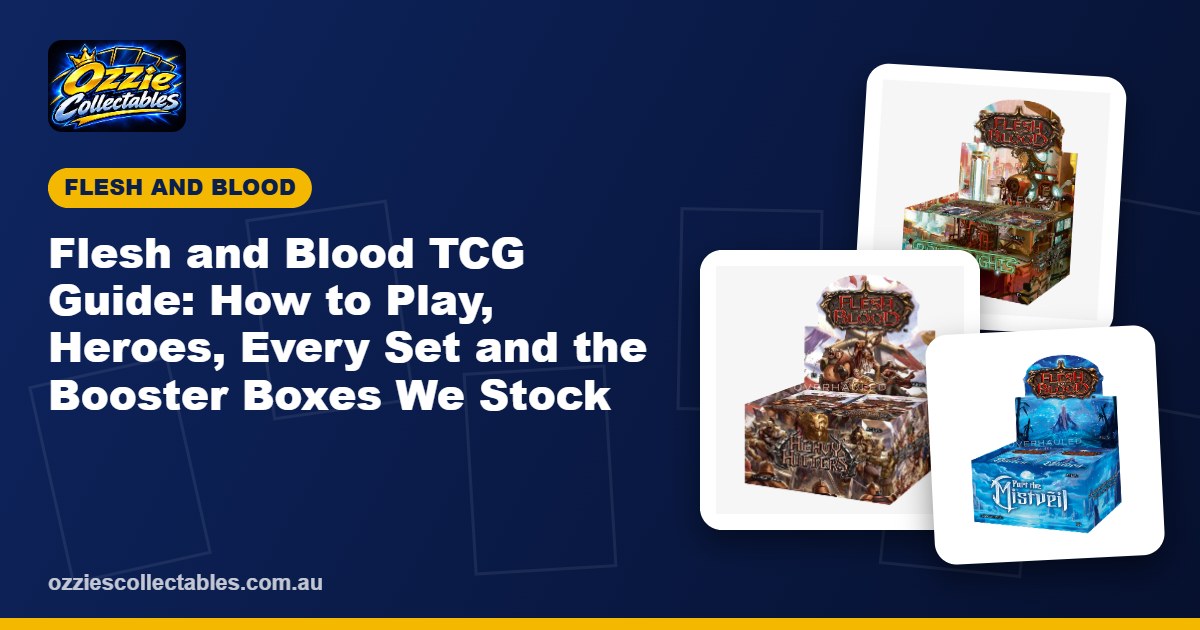
Flesh and Blood TCG is the trading card game from Legend Story Studios, an independent studio based in Auckland, New Zealand, and since its first set in 2019 it has grown into a genuine worldwide game. Every match is a duel between two heroes, and almost every card you hold can attack, defend or pay for something else, so each turn is full of real decisions.
This guide explains how the game works, the classes and heroes you can play, the formats, every booster set released so far and what you get inside each booster box we stock. Whether you are coming from another card game or starting fresh, you will finish knowing exactly where to begin.
What Is the Flesh and Blood TCG?
Flesh and Blood was designed by James White and is published by Legend Story Studios (LSS). The first set, Welcome to Rathe, released on 11 October 2019, and the game has since spread to dozens of countries, with National Championships held in 47 countries in 2025. Made just across the Tasman, it is about as close to a local game as Australian players get.
The game is set in the world of Rathe, and each set explores a different region, from the dragon-scarred land of Volcor to the neon city of Metrix. You play as a single hero, such as a Warrior, a Ninja or a Wizard, and your deck is built entirely around that hero’s class and talents.
What sets the Flesh and Blood TCG apart is how it handles resources. There are no separate land or energy cards. Instead, the cards in your hand do triple duty: you can play them, use them to defend, or “pitch” them to pay for other cards. Learning when to do each is the heart of the game.
How Flesh and Blood Works
The official quickstart rules cover the basics in a few pages, and a first game with a friend is the fastest way to make them click. Here is the short version of how a Flesh and Blood TCG turn works, from your hero card to the end of your turn.
Your Hero
Your hero card shows two key numbers: life and intellect. Life is how much damage you can take before you lose. Intellect is how many cards you draw up to at the end of each of your turns. Reduce your opponent’s life to zero and you win. Your hero, weapon and equipment start the game in play, and before the game you can equip up to one head, chest, arms and legs equipment card.
Pitching Cards for Resources
Most Flesh and Blood cards in your deck have a coloured strip that shows their pitch value: red is worth 1, yellow is worth 2 and blue is worth 3. To pay for a card, you pitch cards from your hand to gain resource points equal to their value. Unused resource points disappear at the end of your turn, so planning which cards to pitch is a big part of the skill.
Action Points and Go Again
You gain one action point at the start of your action phase, and playing an action card costs that point. Cards with go again give you another action point when they resolve, which lets you chain attacks together in a single turn.
Attacking and Defending
When you attack, your opponent can defend by placing cards from their hand that have a defence value, at no cost. Equipment can also block, though it usually breaks or weakens when it does. Damage is the attack’s power minus the total defence, and both players can boost the exchange with attack reactions and defence reactions.
The End Phase and Your Arsenal
At the end of your turn, cards you pitched go to the bottom of your deck, you may place one card face down in your arsenal to use later, and you draw back up to your intellect. Because you choose what to keep, block with or pitch, very few turns ever feel wasted.
Tip: Defending is free but costs you cards for your next turn. A classic beginner mistake is blocking everything. Sometimes taking a hit to keep a strong hand is the better play.
Classes, Heroes and Talents
Each hero belongs to a class, and your deck can only use cards from that class plus generic cards (and any talent your hero has). Choosing a hero is really choosing a play style, so it pays to know what each class does well. There are more than a dozen classes, and the most common include:
- Warrior: weapon-focused heroes with strong single attacks
- Brute: big, random-feeling hits powered by discarding cards
- Guardian: slow, heavy attacks and the best blocking in the game
- Ninja: long chains of cheap attacks with go again
- Wizard: arcane damage that goes around normal defence
- Mechanologist: gadgets, items and boosts from the deck
- Ranger: bows and arrows played from the arsenal
- Runeblade: a mix of physical attacks and arcane damage
- Illusionist: powerful auras and illusions
- Assassin: precise, disruptive attacks
Talents add a second layer to Flesh and Blood deck building. They are themes that cross class lines, so two heroes of the same class can play very differently. For example, Part the Mistveil introduced the Mystic talent, giving its new Assassin, Ninja and Illusionist heroes access to a fresh pool of cards.
Most heroes come in two versions: a young hero, used in shorter formats, and an adult hero for Classic Constructed. The adult version usually has more life, so it suits longer, deeper games. When you buy a preconstructed deck or copy a deck list, check which version of the hero it uses, because each format calls for a specific one.
Flesh and Blood Formats Explained
The same collection supports several ways to play, so your Flesh and Blood cards rarely sit idle. These are the formats you will hear about most often at your local store, from the main competitive format to quick games and limited events.
| Format | Hero | Deck rules | Good for |
|---|---|---|---|
| Classic Constructed | Adult hero | 60-card minimum deck from an 80-card pool, up to 3 copies of each unique card | The main competitive format |
| Silver Age | Young hero | Only common, rare and basic cards | Budget-friendly constructed play |
| Blitz | Young hero | Shorter, faster games | Quick games and newer players |
| Booster Draft and Sealed | Set by the event | Built from packs on the day | Prereleases and limited events |
In Classic Constructed, a “unique” card means a different name or pitch value, so the red and blue versions of the same card count separately. Silver Age is the newest constructed format, launched in late 2025, and it is supported by ready-to-play Silver Age decks that LSS says are tournament-ready out of the box. The official site lists other formats too, including Living Legend, Ultimate Pit Fight and team formats.
Every Flesh and Blood Set So Far
Here is the full list of main Flesh and Blood sets, taken from the official booster sets page. Dates are the English release dates, and early sets were later reprinted in Unlimited editions, which are not listed separately here.
| # | Set | Release date |
|---|---|---|
| 1 | Welcome to Rathe | 11 October 2019 |
| 2 | Arcane Rising | 27 March 2020 |
| 3 | Crucible of War | 28 August 2020 |
| 4 | Monarch | 7 May 2021 |
| 5 | Tales of Aria | 24 September 2021 |
| 6 | Everfest | 4 February 2022 |
| 7 | Uprising | 24 June 2022 |
| 8 | Dynasty | 11 November 2022 |
| 9 | Outsiders | 24 March 2023 |
| 10 | Dusk till Dawn | 14 July 2023 |
| 11 | Bright Lights | 6 October 2023 |
| 12 | Heavy Hitters | 2 February 2024 |
| 13 | Part the Mistveil | 31 May 2024 |
| 14 | Rosetta | 20 September 2024 |
| 15 | The Hunted | 31 January 2025 |
| 16 | High Seas | 6 June 2025 |
| 17 | Super Slam | 26 September 2025 |
| 18 | Compendium of Rathe | 13 February 2026 |
| 19 | Omens of the Third Age | 5 June 2026 |
| 20 | Usurp the Shadow Throne | 25 September 2026 |
The next booster set, Outbreak, is already listed on the official site, so check there for its confirmed release date. Alongside the main sets, LSS also releases supplementary products such as History Packs, Mastery Packs, Armory Decks and preconstructed decks, which are not included in the table above.
The Flesh and Blood Booster Boxes We Stock
We carry English booster boxes for five popular Flesh and Blood sets. Each one has a clear theme and a different set of heroes, so it is worth knowing what you are opening before you choose. Here is a quick comparison, followed by a closer look at each box.
| Booster box | Release | Set size | Focus |
|---|---|---|---|
| Uprising | 24 June 2022 | 226 cards plus Marvels | Dromai, Fai and Iyslander in Volcor |
| Bright Lights | 6 October 2023 | 251 cards | Three Mechanologist heroes in Metrix |
| Heavy Hitters | 2 February 2024 | 255 cards | Six Brute, Guardian and Warrior heroes |
| Part the Mistveil | 31 May 2024 | 239 cards | The Mystic talent and Chi |
| Super Slam | 26 September 2025 | 276 cards | Guardians and Brutes in the arena |
Uprising
Uprising is set during a civil war in Volcor, a harsh land where the uprising fights back against Imperial oppression. Its three heroes are Dromai, an Imperial Illusionist who conjures Volcor’s legendary dragons, Fai, the hot-headed Ninja leading the uprising, and Iyslander, who comes from an icy homestead. Our Uprising Booster Box is a great pick for dragon fans.
Bright Lights
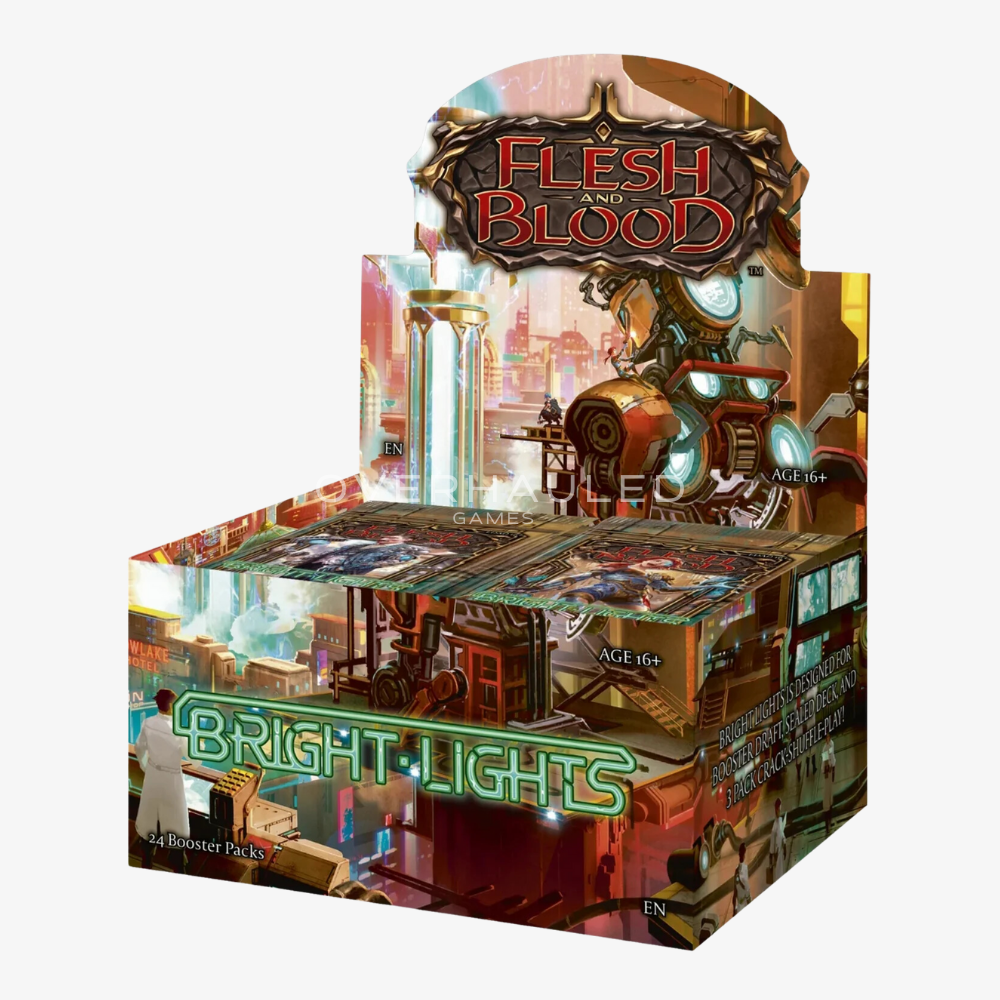
Bright Lights is a standalone set in Metrix, a neon-lit city run by giant tech conglomerates. It brings three new Mechanologist heroes, and its Expansion Slot adds cards for other classes and talents. It also includes a reprint of the well-known equipment card Fyendal’s Spring Tunic. Grab the Bright Lights Booster Box if gadgets and machines are your style.
Heavy Hitters
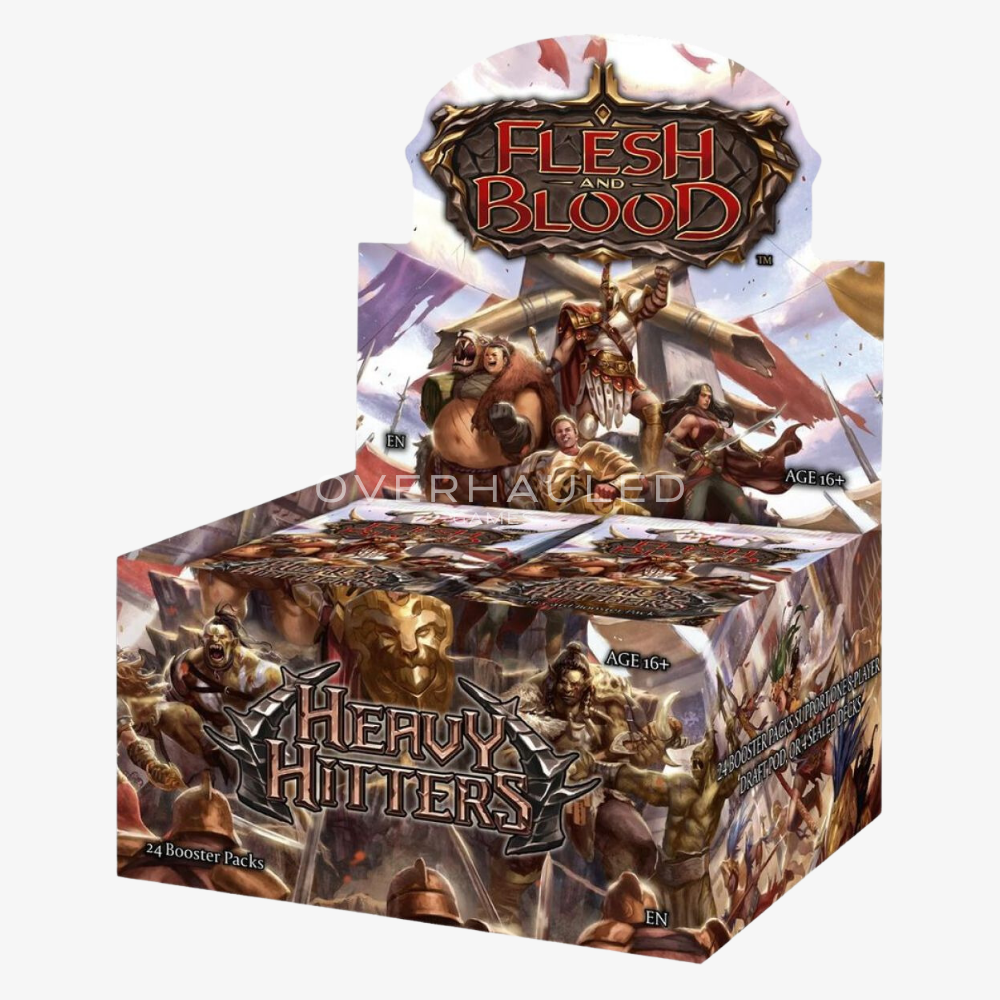
Heavy Hitters returns to three of the game’s original four classes, with six heroes across Brute, Guardian and Warrior plus crossover hybrid cards. LSS describes it as the perfect set to try Flesh and Blood for the first time, which makes our Heavy Hitters Booster Box an easy recommendation for new players.
Part the Mistveil
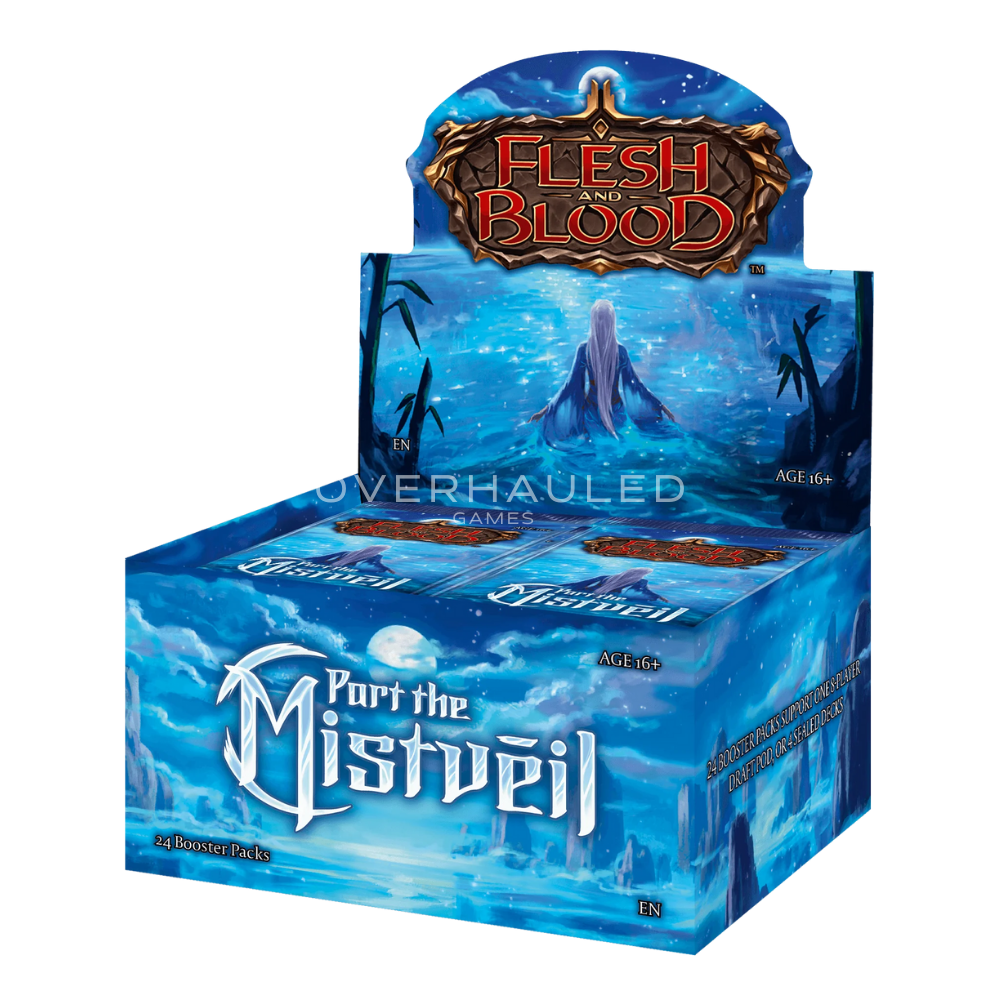
Part the Mistveil explores the misty valleys of Misteria and introduces a new resource called Chi. Its three Mystic heroes, Nuu, Zen and Enigma, span the Assassin, Ninja and Illusionist classes, and the set features traditional Japanese illustration cards. It was also the first booster set released in Japanese. Our Part the Mistveil Booster Box suits players who enjoy a more technical game.
Super Slam
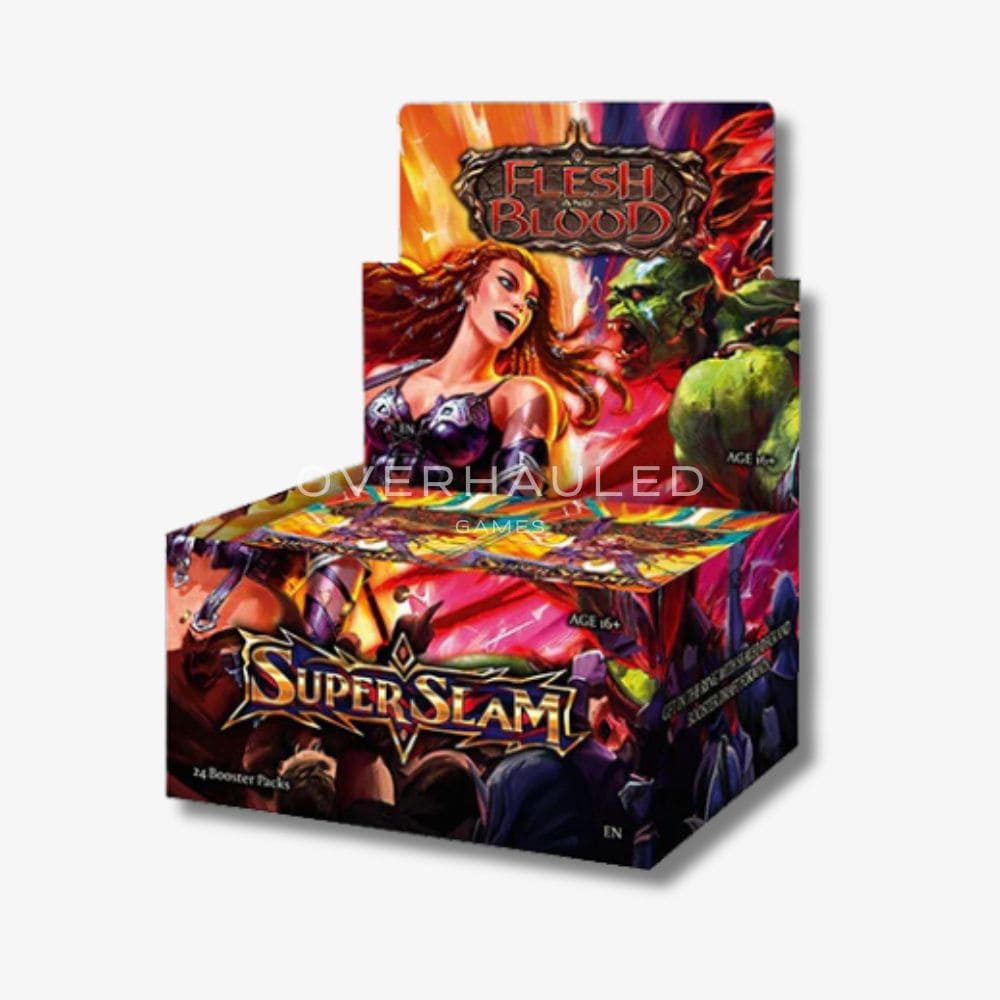
Super Slam throws Guardians and Brutes into a weaponless Deathmatch Arena. Revered heroes draw on the crowd’s respect, while Reviled heroes play dirty, and the set includes the game’s first-ever hero with 5 intellect. Our Super Slam Booster Box is listed as random select, so check the product page for details.
What’s Inside a Flesh and Blood Booster Box
Every Flesh and Blood booster box (officially a booster display) contains 24 packs, and four displays make up a sealed case. Pack layouts change a little from set to set, so it is worth checking before you open. For the five sets above, official product pages list each English pack as follows:
- Uprising, Bright Lights, Heavy Hitters and Part the Mistveil: 16 cards, including 11 commons, 2 cards of rare or higher (1 rare plus 1 rare or majestic), 1 rainbow foil and token or Expansion Slot cards.
- Super Slam: 15 cards, including 11 commons, 2 rare or higher (1 rare plus 1 rare, super rare or majestic), 1 rainbow foil and 1 basic, Expansion Slot, legendary or Marvel card.
Cold foils are the big chase. In Bright Lights, Heavy Hitters, Part the Mistveil and Super Slam, a cold foil appears roughly once per 24 packs, replacing a token or basic. In Uprising, the official page lists one cold foil per display. Beyond that, sets contain Legendary and Fabled cards, plus Marvels, special collector versions of selected cards. LSS notes that no specific card or rarity is guaranteed in any pack, box or case.
Looking ahead, LSS has announced that from Set 22, packs will include one non-foil rare-or-higher card instead of two, and that the Fabled rarity is being retired. That change does not affect any of the boxes we currently stock. You can browse every display we carry on our Flesh and Blood Booster Boxes page.
Flesh and Blood Cards: Rarities and Collecting
Flesh and Blood cards come in a clear rarity ladder, from token and common up through rare, super rare (in Super Slam), majestic, legendary and Fabled. Fabled cards are the rarest of all, usually one per set. On top of that, foil treatments such as rainbow foil and cold foil, plus Marvels, give collectors plenty to chase.
To check what you have pulled, use the official Flesh and Blood card database, which is linked from the fabtcg.com home page. It is the safest place to confirm card names, pitch colours and set details before you trade or build. A few tips for organising your collection:
- Sort by set, then by class. It makes deck building far quicker.
- Keep pitch colours together. Red, yellow and blue versions of the same card are separate cards in deck building.
- Protect your foils. Cold foils and Marvels deserve sleeves and top loaders, or a quality binder.
- Track equipment separately. Rare equipment is often the piece you need to finish a deck.
Getting Started With the Flesh and Blood TCG in Australia
Local game stores across Australia run regular Flesh and Blood nights, often called Armory events, along with prereleases and seasonal tournaments. These are the best places to learn because experienced players are usually happy to walk you through your first game.
A simple path for new players:
- Pick a hero that suits you. Fast and aggressive, slow and defensive, or tricky and technical, there is a class for every style.
- Start with a preconstructed deck. Silver Age decks and Armory Decks are designed to be played straight away.
- Open a Flesh and Blood booster box. Heavy Hitters is pitched by LSS as an ideal first set, and Super Slam is a great follow-up for Guardian and Brute fans.
- Join a local event. Even a casual night will teach you more than reading rules online.
If you enjoy other card games, our guides to riftbound and Star Wars Unlimited are a great next read. Both are newer games with plenty of room for fresh players, and the full blog has beginner guides for every game we stock.
Flesh and Blood TCG FAQ
Who makes the Flesh and Blood TCG?
The Flesh and Blood TCG was designed by James White and is published by Legend Story Studios, an independent studio in Auckland, New Zealand. The first set, Welcome to Rathe, released in October 2019, and new sets have followed every few months since.
How many packs are in a Flesh and Blood booster box?
A Flesh and Blood booster box contains 24 packs. Packs in Uprising, Bright Lights, Heavy Hitters and Part the Mistveil contain 16 cards, while English Super Slam packs contain 15. Every pack includes a rainbow foil and two cards of rare or higher.
How many Flesh and Blood sets are there?
The official list of Flesh and Blood sets runs from Welcome to Rathe in 2019 to Usurp the Shadow Throne in September 2026, which is 20 main booster sets. Outbreak is listed as the next release, alongside a steady stream of decks and supplementary products.
Which Flesh and Blood set is best for beginners?
LSS describes Heavy Hitters as the perfect set to try Flesh and Blood for the first time, thanks to its big-hitting Brute, Guardian and Warrior heroes. Silver Age preconstructed decks are another easy starting point.
What does pitching mean in Flesh and Blood?
Pitching means putting a card from your hand into your pitch zone to gain resources. Red cards give 1, yellow give 2 and blue give 3, and pitched cards go to the bottom of your deck at the end of your turn.
Ready to choose your hero? Browse our full range of Flesh and Blood Booster Boxes, or explore every booster box we stock across all the games we carry. Every product is 100% authentic, officially licensed, priced in Australian dollars and shipped Australia-wide. If you have any questions about a set, contact us and we will be happy to help.
Shop the products in this guide
100% authentic, officially licensed and shipped Australia-wide.
Flesh and Blood: Bright Lights – Booster Box
Flesh and Blood: Heavy Hitters – Booster Box
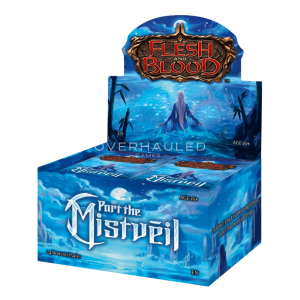
Flesh and Blood: Part the Mistveil – Booster Box
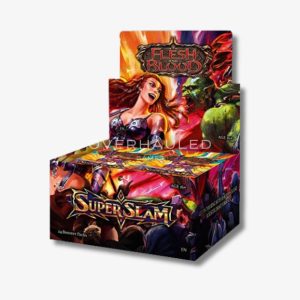
Flesh and Blood – Super Slam Booster Box (Random Select)
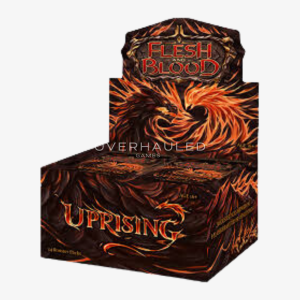
Flesh and Blood: Uprising – Booster Box
Keep reading
All guides
Yu-Gi-Oh!
Yugioh Limit Over Collection Guide: The Heroes vs The Rivals, Rarities and What’s in a Box
Everything collectors need to know about the Japanese Yugioh Limit Over Collection: The Heroes and The Rivals, their rarities, box contents and more.
Star Wars: Unlimited
Star Wars Unlimited Guide: How to Play, Every Set and What’s in a Booster Box
A plain-English guide to Star Wars Unlimited: the rules, every set released so far, booster box contents and the easiest way for Aussies to start.

Riftbound
Riftbound Guide: How the League of Legends TCG Works, Every Set and Where to Start
Everything an Aussie player or collector needs to know about Riftbound, from the basic rules to the Origins, Spiritforged, Unleashed and Vendetta sets.