Japanese Pokémon Cards: A Buyer’s Guide for Australian Collectors
How Japanese Pokémon cards differ from English, how to read Japanese set codes, box formats, value questions and the best sets to start with.
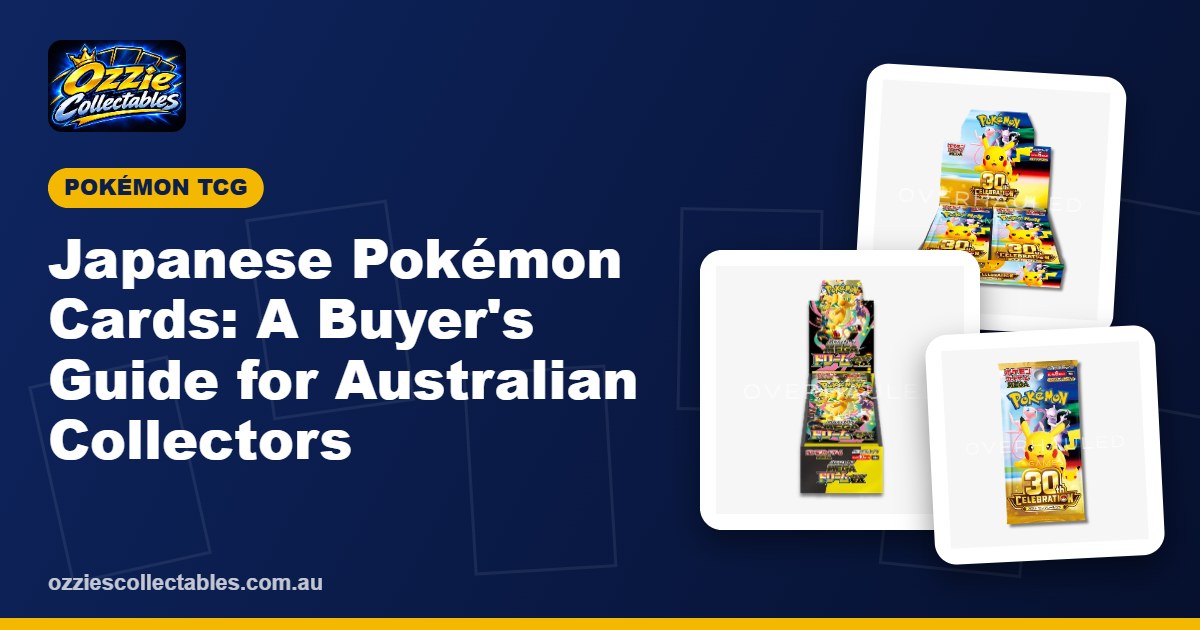
Japanese Pokémon cards have become a favourite with Australian collectors, and it is easy to see why. They arrive first, they look a little different, and their compact packs make opening a whole box feel achievable. But if you have only ever bought English product, the set codes, pack sizes and rarity letters on Japanese Pokémon packs can be confusing at first.
This guide covers everything you need to know before you buy: how Japanese and English cards differ, how Japanese Pokémon sets match up with English ones, how to read a Japanese set code, whether Japanese cards are worth more, and which sets make a great starting point. Every product we sell is 100% authentic and officially licensed, priced in Australian dollars and shipped Australia-wide.
Why Collect Japanese Pokémon Cards?
The Pokémon Trading Card Game started in Japan in 1996, and new cards still debut there first. For many collectors that alone is reason enough. If you want to see and hold the newest artwork before it reaches English shelves, Japanese Pokémon sets are the way to do it. Opening Japanese Pokémon packs also gives you a different experience, with smaller packs and boxes that are built around the hits. Here is why so many Australian fans now collect in Japanese:
- Early access. Japanese sets usually release around two months before the matching English set.
- Print quality. Japanese cards have a strong reputation for crisp printing and attractive foil finishes.
- Compact boxes. A standard box holds 30 small packs, which makes a full box opening quick and fun.
- Exclusive products. Some Japanese releases, promos and premium boxes never get an English version.
- Display appeal. Many collectors simply prefer the look of the Japanese text and card backs in a binder.
Japanese Pokémon Cards vs English: The Key Differences
Japanese and English cards share the same gameplay and the same physical size, but there are real differences in how they are packed, released and printed. Understanding them will help you decide which language suits your collection. In short, Japanese Pokémon packs are smaller and sets arrive more often, while English sets are larger and land later.
| Feature | Japanese | English |
|---|---|---|
| Cards per standard pack | 5 | 10 (plus a Basic Energy and a code card) |
| Packs per standard box | 30 | 36 |
| Card size | 63 x 88 mm | 63 x 88 mm |
| Card back | Gold border with a rainbow burst | Dark blue border with a white swirl |
| Rarity marking | Printed letters such as RR, AR, SR and SAR | Rarity symbols |
| Set structure | Smaller, more frequent sets | Larger sets that often combine Japanese releases |
| Release timing | First | Usually around two months later |
Card quality and finish
Collectors often praise Japanese Pokémon cards for consistent print quality, sharp colours and distinctive foil patterns. No print run is perfect in any language, so centring and edges still vary from card to card. If you plan to grade, inspect each Japanese Pokémon card carefully before sleeving it, just as you would with English cards.
Pack size and set structure
A standard Japanese pack holds 5 cards, half the size of an English pack. Japanese sets are also smaller, and the English version of a release often merges cards from two or more Japanese Pokémon sets. That means a single English set can feel bigger, while Japanese releases come out more often and each one has a tighter focus.
Release timing
Most Japanese main sets in the Mega era have arrived roughly two to four months ahead of their English counterparts. Inferno X, for example, launched in Japan on 26 September 2025, while its English version followed on 14 November 2025. If you love seeing new artwork first, buying Japanese is the easiest way to stay ahead of the English release calendar.
Card backs and sleeves
The Japanese Pokémon card back is a completely different design from the international back, so you can always tell the languages apart from behind. Both are the standard 63 x 88 mm size. Be careful with sleeves labelled “Japanese size”: that usually refers to the smaller Yu-Gi-Oh! format, which is too small for Pokémon cards.
How Japanese Pokémon Sets Match Up With English Sets
Because Japan releases first, each English main set in the current Mega Evolution series has followed a Japanese counterpart by a couple of months. Here is how recent releases line up. Japanese dates are from Serebii’s Japanese set list.
| Japanese set (code) | Japanese release | English counterpart |
|---|---|---|
| Mega Brave (M1L) and Mega Symphonia (M1S) | 1 August 2025 | Mega Evolution (26 September 2025) |
| Inferno X (M2) | 26 September 2025 | Phantasmal Flames (14 November 2025) |
| Mega Dream ex (M2a) | 28 November 2025 | Closely linked to Ascended Heroes |
| Nihil Zero (M3) | 23 January 2026 | Perfect Order (27 March 2026) |
| Ninja Spinner (M4) | 13 March 2026 | Chaos Rising (22 May 2026) |
| Abyss Eye (M5) | 22 May 2026 | Pitch Black (17 July 2026) |
| Storm Emeralda (M6) | July 2026 | Expected in Delta Reign (6 November 2026) |
The first Mega Evolution set is a good example of merging: the English set combines cards from both Mega Brave and Mega Symphonia. Card numbers and rarities often differ between the two versions, and a card can even land in a different set, so do not assume a Japanese card has an identical English twin. The 30th Celebration set broke the usual pattern, with Japanese and English versions both launching in September 2026.
How to Read Japanese Set Codes
Japanese product is labelled with short set codes rather than English-style set names, and the same code is printed in the bottom corner of every card. Once you know the pattern, you can identify almost any Japanese Pokémon card or box at a glance.
The era prefix
The letters at the start of a code tell you which era of Japanese Pokémon sets a product belongs to. This is the quickest way to tell a brand-new release from an older Sword & Shield or Scarlet & Violet box:
- S is the Sword & Shield era, for example S6a Eevee Heroes or S12a VSTAR Universe.
- SV is the Scarlet & Violet era, for example SV2a Pokémon Card 151 or SV8a Terastal Festival ex.
- M is the current Mega era, for example M2 Inferno X or M6 Storm Emeralda.
The number and suffix
The number is the main expansion in that era. A lowercase “a” (and sometimes “b”) usually marks a smaller set released between the numbered main expansions. Some are mini expansions such as SV9a Heat Wave Arena, while others are major special sets such as SV2a 151, SV4a Shiny Treasure ex and M2a Mega Dream ex.
Paired sets released together get a letter each. Examples include S1W Sword and S1H Shield, SV1S Scarlet ex and SV1V Violet ex, SV11B Black Bolt and SV11W White Flare, and M1L Mega Brave and M1S Mega Symphonia. Each paired set has its own box and its own card list.
Reading the bottom of a card
On a modern Japanese card, the bottom corner shows the regulation mark, the set code, the card number (for example 001/080) and a rarity code. Rarities are printed as letters, such as RR for Double Rare, AR for Art Rare, SR for Super Rare and SAR for Special Art Rare. Card numbers above the set total are the secret rares. English cards use a short set abbreviation and rarity symbols instead.
Are Japanese Pokémon Cards Worth More?
This is one of the most common questions we get, and the honest answer is: sometimes, but not always. There is no rule that one language is worth more than the other. Value depends on the exact card, its condition and grade, how many were printed, and how many collectors want it at that moment. Some cards sell for more in Japanese, while others are more sought after in English. A few factors are worth knowing:
- Exclusives. Some Japanese Pokémon promos and products never get an English release, which can attract strong demand.
- Different card lists. Because sets are split and merged differently, a chase card might sit in a different set, or at a different rarity, in each language.
- Grading. Condition matters enormously. A well-centred, high-grade card in either language usually stands out from raw copies.
- Local demand. Australian collectors have their own favourites, and prices here can move differently from overseas markets.
Our advice is to collect what you enjoy. We never recommend buying cards purely as an investment, as values can rise and fall. If you want to know what a specific card is selling for, check recent sold listings for the exact card number and language rather than relying on general rules.
Japanese Pokémon Packs and Box Formats
Japanese Pokémon sets come in several box formats, and the packs inside each one differ too. The type of set is usually clear from the product name, but it is always worth checking the pack count before you buy. Here are the main formats you will see on the shelf today.
| Japanese box type | Packs per box | Cards per pack | Example |
|---|---|---|---|
| Standard expansion | 30 | 5 | Inferno X (M2), Storm Emeralda (M6) |
| Special set | 20 | 7 | Pokémon Card 151 (SV2a) |
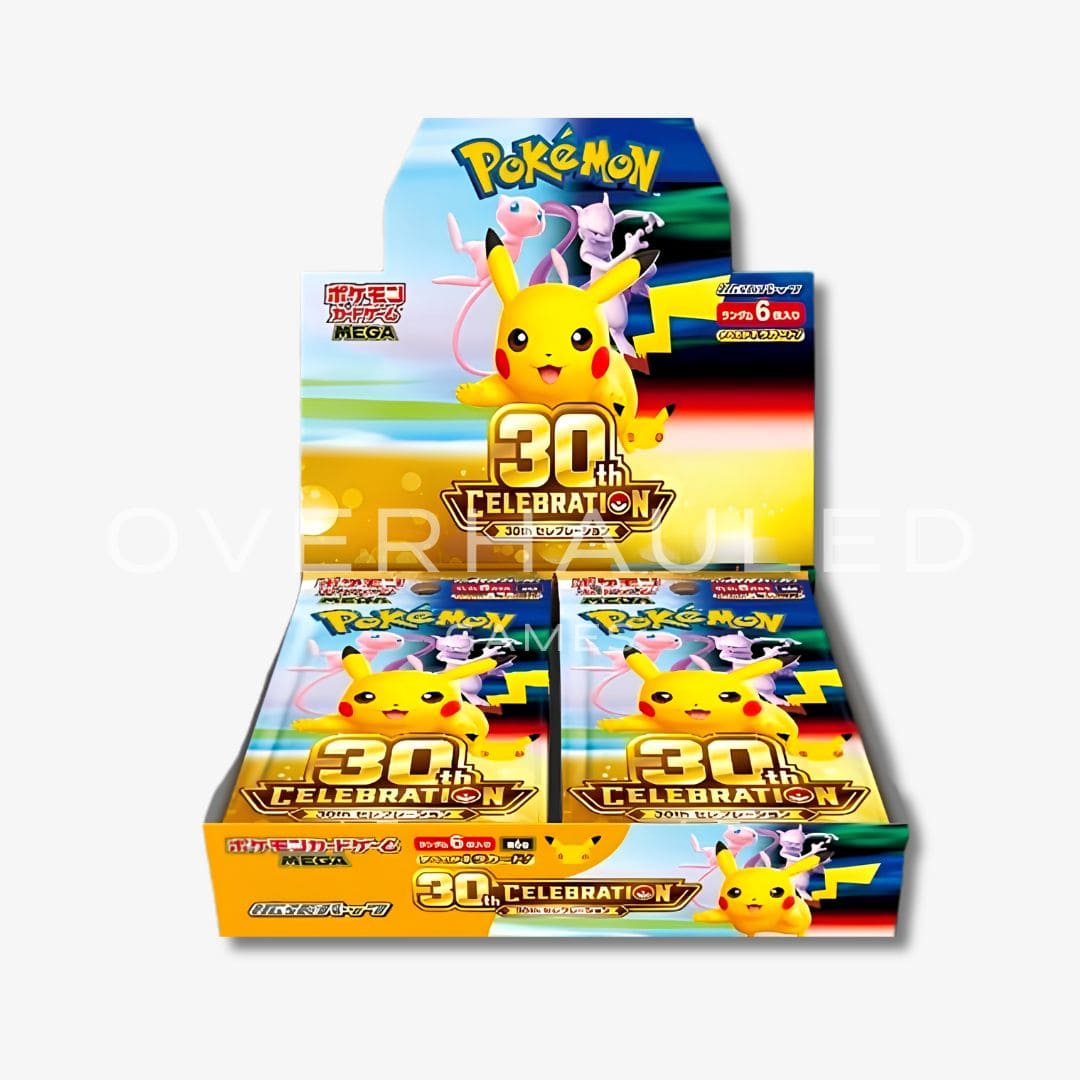
| 30th Celebration | 20 | 6 | 30th Celebration (M6a) |
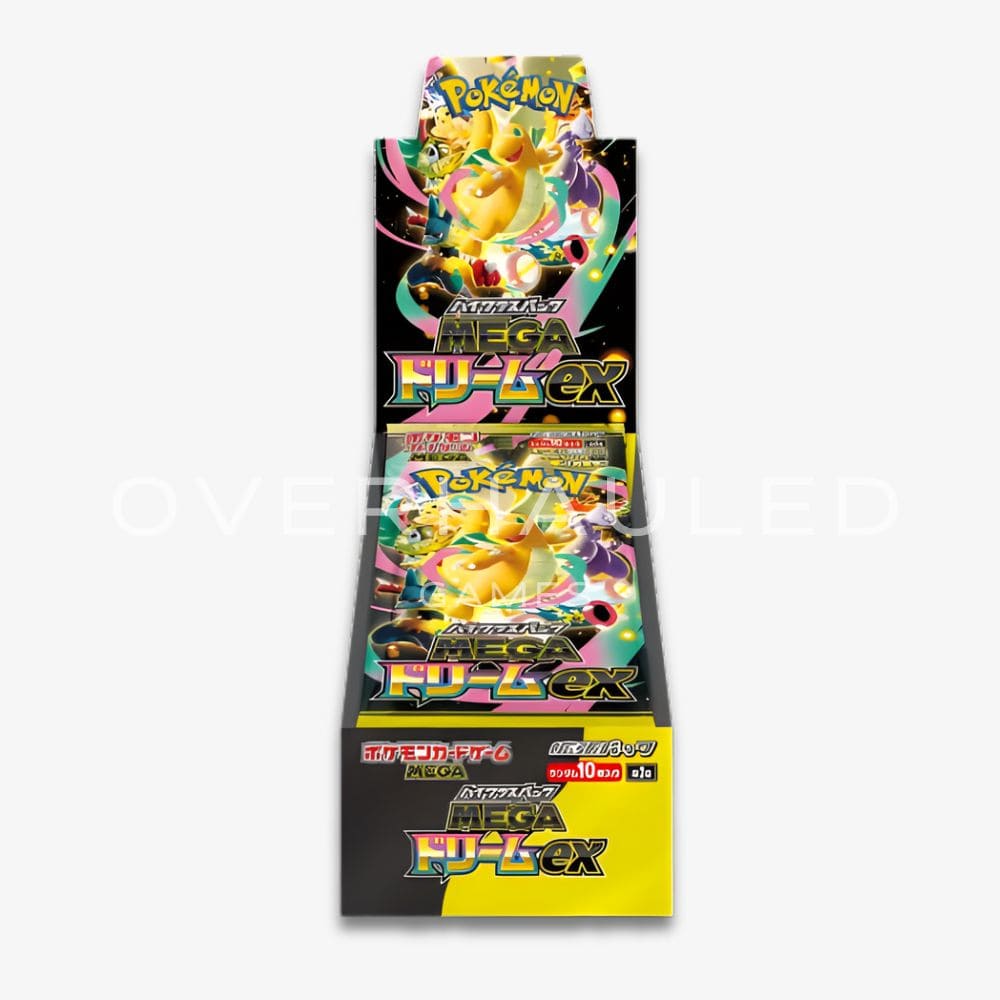
| High class pack | 10 | 10 | Mega Dream ex (M2a) |
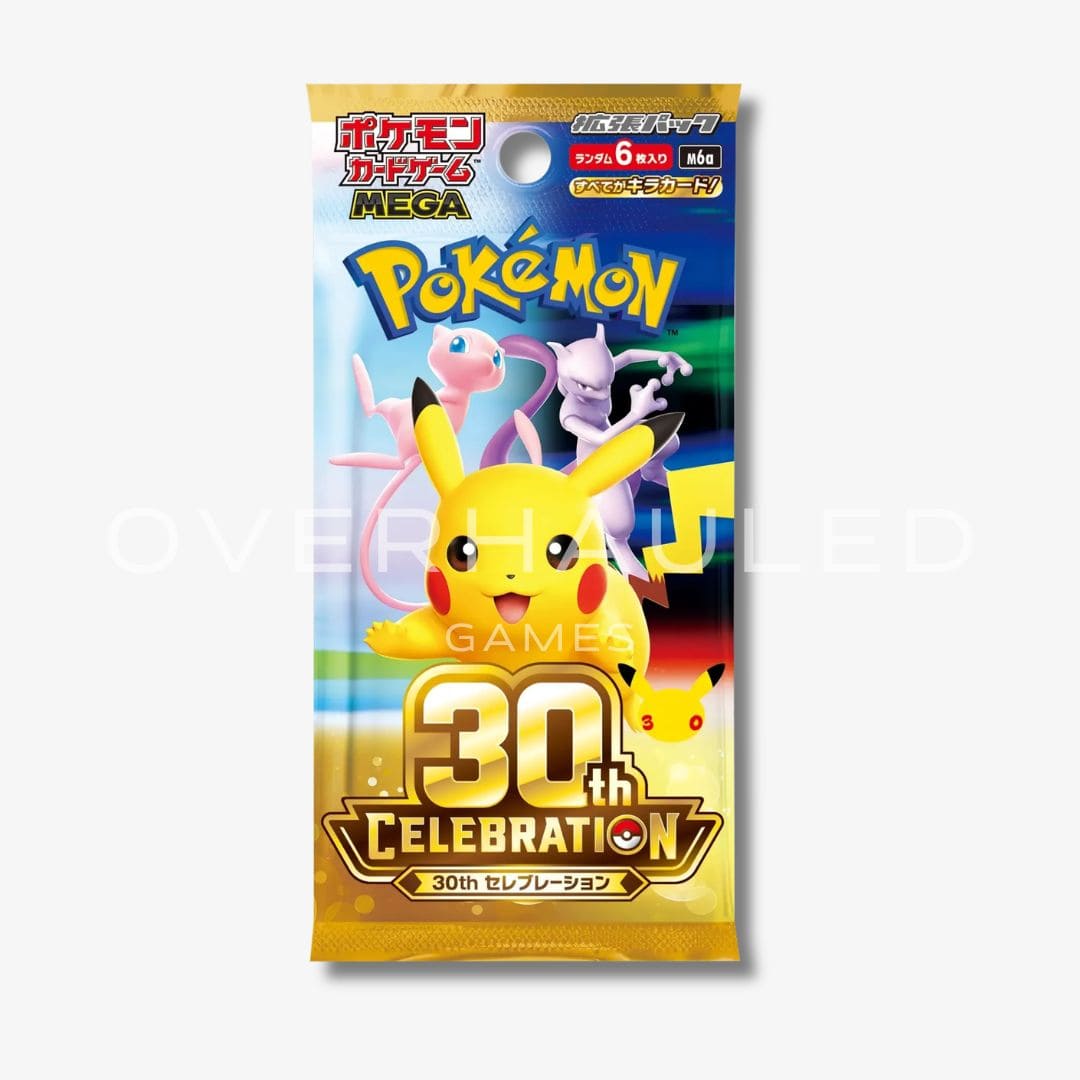
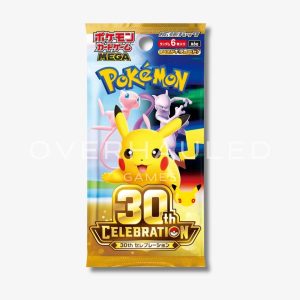
The 30th Celebration set has a fun twist: every Japanese pack includes one of 30 different Pikachu cards, each by a different illustrator, as PokeGuardian confirmed. If you only want a taste of the set, the 30th Celebration Booster Pack M6a is an easy way to try it.
Loose Japanese Pokémon packs are a great way to sample a set before committing to a full box. Browse the range in Japanese Pokémon Booster Packs, then step up to a full box when you find a set you love. For a full breakdown of how box formats differ across English, Japanese, Korean and Chinese releases, read our Pokémon booster box buying guide.
Sealed cases
Japanese sealed cases are the factory cartons that boxes ship in. Standard expansions are usually packed 12 boxes to a case, while high class sets usually come 20 boxes to a case, such as the Shiny Treasure ex sealed case. Special sets vary, so check each listing. See the full range in Japanese Pokémon Sealed Cases.
Which Japanese Pokémon Sets Should You Start With?
There is no wrong place to start, but some sets are especially beginner-friendly. These are the ones we suggest most often to Australian collectors trying Japanese Pokémon for the first time, whether you want the newest release, a premium high class set or a modern classic.
30th Celebration (M6a)
The headline set of the Pokémon 30th Anniversary year, packed with nostalgic Pokémon and the guaranteed Pikachu in every pack. Start with the 30th Celebration Booster Box M6a. Our 30th Anniversary Pokémon card list shows what to chase, and our Pokémon 30th Anniversary booster box guide compares the language options.
Mega Dream ex (M2a)
A high class set released on 28 November 2025, with 10 cards in every pack. The official Japanese product page lists it as a high class pack, and boxes are small at 10 packs. It is a great choice if you want a big, hit-heavy set in a compact box. See the Mega Dream Booster Box M2a.
A current standard expansion
For the classic Japanese experience of 30 packs of 5 cards, try a recent main set such as Storm Emeralda M6, Abyss Eye M5 or Inferno X M2. These Japanese Pokémon sets later feed into English releases, so you get to see the cards early. Standard boxes are also the best way to learn how Japanese rarities and set codes work.
Fan-favourite special sets
Older special sets remain popular for good reason. The 151 Booster Box SV2a celebrates the original 151 Pokémon, while Shiny Treasure ex SV4a and Terastal Festival ex SV8a are high class sets loved by binder collectors. You can browse every format, old and new, in our Japanese Pokémon booster box range.
Japanese Special Collections and Premium Boxes
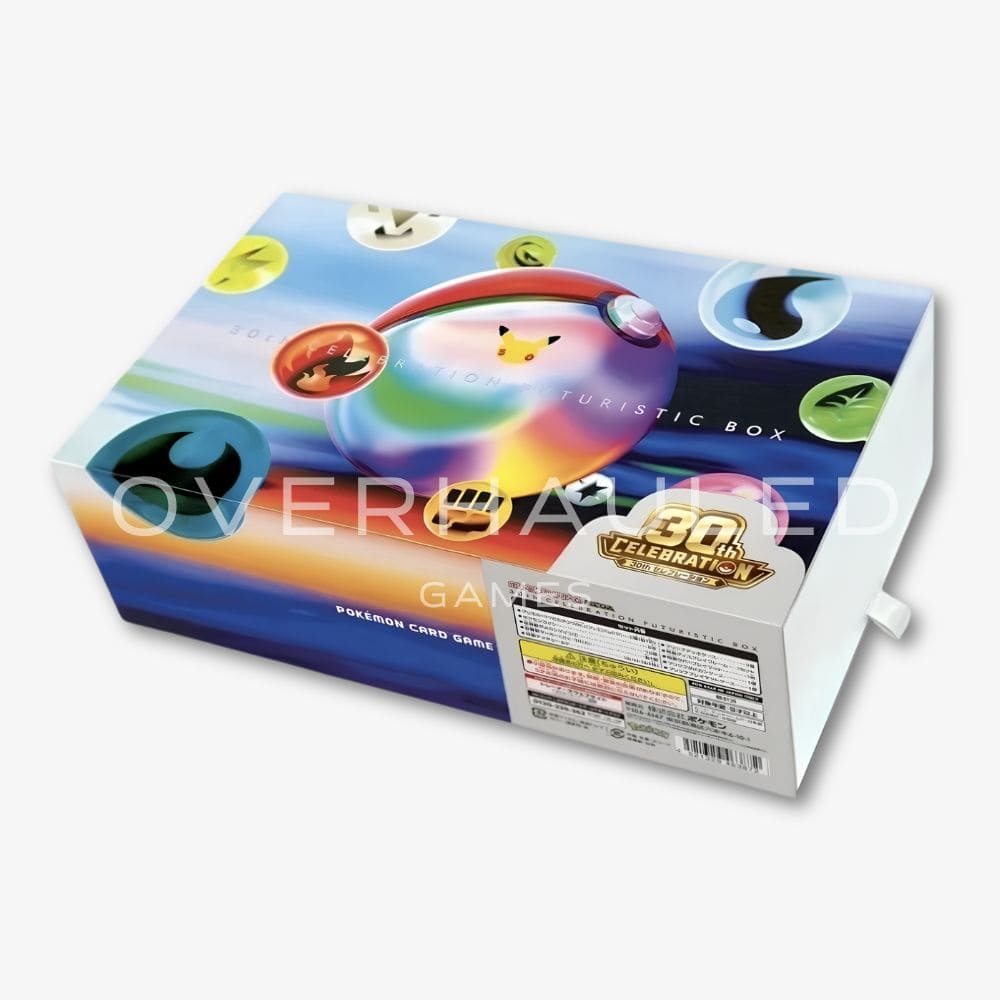
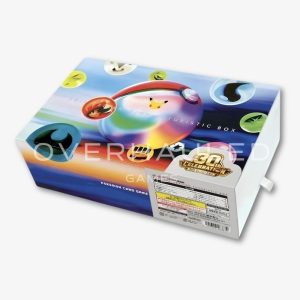
Beyond booster boxes, Japanese Pokémon releases include premium products that are often aimed squarely at collectors. A standout this year is the 30th Celebration Futuristic Box. It contains no booster packs. Instead, it is a premium accessory set with two Pikachu ex promo cards, Pokémon coins, metal damage counter dice, metal condition markers, 64 sleeves, a deck case, a display frame and a rubber playmat.
Other special products worth a look include the Espeon & Umbreon Premium Deck Set from the 30th Celebration line and the Mega Brave & Symphonia Premium Trainer Box. Contents vary widely from product to product, so check each listing for exactly what is inside. The full range sits in Japanese Pokémon Special Collections.
Tips for Buying Japanese Pokémon Cards in Australia
Buying Japanese Pokémon product locally is simple once you know what to look for, and buying from an Australian store means everything is priced in Australian dollars. Keep these tips in mind and you will avoid the most common mistakes:
- Check the set code. Japanese product is identified by codes such as M2a or SV2a, so match the code as well as the name.
- Confirm the box format. Pack counts vary from 10 to 30 depending on the set type.
- Know what shrink wrap to expect. Some Japanese boxes are sold with shrink wrap and others are sealed without it, depending on the release, so read the listing.
- Use the right sleeves. Pokémon cards in every language are 63 x 88 mm. Avoid “Japanese size” sleeves meant for Yu-Gi-Oh!.
- Play in English at events. If you want to play at Play! Pokémon tournaments in Australia, use English cards and check the current rules.
- Store them properly. Heat, sunlight and humidity are hard on cardboard, so keep sealed boxes in a cool, dry room.
- Buy authentic product. Every Japanese Pokémon card and box we sell is 100% authentic and officially licensed.
Japanese cards are fully playable at home and at casual games with friends, and the gameplay is the same. Many collectors keep a Japanese Pokémon binder alongside an English playing collection, which gives you the best of both worlds. If you cannot read Japanese, the artwork, set code and card number are all you need to identify a card.
Japanese Pokémon Cards FAQ
Are Japanese Pokémon cards the same size as English cards?
Yes. Both are 63 x 88 mm, so standard Pokémon sleeves, toploaders and binders work for both, and you can store Japanese and English cards side by side. Avoid sleeves labelled “Japanese size”, which usually means the smaller Yu-Gi-Oh! format and will not fit Pokémon cards.
How many cards are in a Japanese Pokémon pack?
A standard Japanese expansion pack holds 5 cards. Special sets differ: Pokémon Card 151 packs hold 7, 30th Celebration packs hold 6 and high class packs such as Mega Dream ex hold 10. Always check the product listing for the format.
Do Japanese Pokémon sets come out before English sets?
Usually, yes. Recent Japanese main sets have released around two months before their English counterparts, and English sets sometimes combine two Japanese releases into one. That is why many collectors buy Japanese to see new cards early, then pick up English product later for play.
Can I use Japanese Pokémon cards in tournaments?
For casual play, absolutely. Japanese cards have a different back from every other language, so they are not suitable for Play! Pokémon events in Australia. If you want to compete, build your tournament deck with English cards and check the current rules.
Are Japanese Pokémon cards worth more than English?
Not automatically. Some cards are more valuable in Japanese and others in English. Japanese Pokémon card values depend on the card, its condition, its print run and current demand, so check recent sales for the exact card and language. Collect what you enjoy rather than buying purely as an investment.
What is the best Japanese set for beginners?
A recent standard expansion is the easiest start, while the 30th Celebration and Mega Dream ex sets are great if you want something special. Fan favourites such as 151 SV2a are also a popular first Japanese box, especially for collectors who grew up with the original Pokémon.
Ready to start your Japanese collection? Browse our Japanese Pokémon Booster Boxes, Japanese Pokémon Booster Packs and Japanese Pokémon Special Collections, or read more guides on the Ozzie Collectables blog. If you have any questions about a Japanese product, contact us and we will be happy to help.
Shop the products in this guide
100% authentic, officially licensed and shipped Australia-wide.
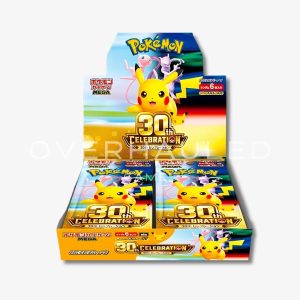
30th Celebration Booster Box M6a – Japanese Pokemon TCG
Mega Dream Booster Box M2a – Japanese Pokemon TCG
30th Celebration Booster Pack M6a – Japanese Pokemon TCG
30th Celebration Futuristic Box – Japanese Pokemon TCG
Keep reading
All guides
Pokémon TCG
Pokémon Booster Box Buying Guide for Australian Collectors (2026)
What Australian collectors should know before buying a Pokémon booster box: pack counts by language, ETBs vs bundles, sealed cases and storage.

Pokémon TCG
Destined Rivals Guide: Team Rocket Chase Cards, Card List and Products
Team Rocket returns in Destined Rivals (SV10). Release details, the Special Illustration Rares and gold cards, rarity breakdown and which box to buy.
Pokémon TCG
Prismatic Evolutions Guide: Eeveelution Chase Cards, Products and Buying in 2026
Umbreon ex, Sylveon ex and the other Eeveelution chase cards, the full product line-up and how to buy Prismatic Evolutions in 2026.